
Why Your First SR-22 Quote Was So High
Your California accident triggered two separate insurance events: your carrier either surcharged your premium or non-renewed your policy, and the DMV suspended your license pending SR-22 proof of financial responsibility. Most drivers call their current carrier first, get quoted a post-accident rate plus SR-22 filing, and assume that's the market. It's not. That quote reflects your current carrier's unwillingness to retain accident-tier risk at competitive pricing.
The SR-22 certificate itself costs $15–$25 as a one-time filing fee in California. The actual cost problem is the underlying auto insurance policy the SR-22 certifies. Standard carriers (State Farm, Allstate, Farmers) write preferred and standard tiers. After an at-fault accident, you've been re-tiered into their highest-risk bucket, where surcharges can reach 50–80% above your prior premium. Non-standard carriers (The General, Bristol West, Acceptance, Infinity) write accident-tier risk as their primary business and price it structurally lower because their entire book expects claims.
Compare car insurance rates in your state
Get quotes from licensed carriers — no obligation, no spam, results in minutes.
Get Your Free QuoteCalifornia SR-22 Filing Fee
$15–$25
The SR-22 certificate filing is a one-time administrative charge carriers add to process the DMV notification. This fee is negligible compared to the post-accident premium itself, which is where rate variation occurs.
California Department of Insurance carrier filings
What California's SR-22 Requirement Actually Means
California Vehicle Code §16070 requires SR-22 proof of financial responsibility after specific triggers: at-fault accidents while uninsured, DUI convictions, negligent operator suspensions, and certain license reinstatements. The SR-22 is not insurance — it's a certificate your carrier files electronically with the DMV certifying you carry at least California's minimum liability limits: $15,000 bodily injury per person, $30,000 per accident, $5,000 property damage.
Your carrier monitors your policy continuously. If you cancel, lapse, or let coverage drop below state minimums at any point during the required filing period, the carrier notifies the DMV within 15 days and your license is re-suspended immediately. California typically requires SR-22 for 3 years from the reinstatement date for accident-related triggers. You must maintain continuous coverage for the full period.
The accident that triggered your SR-22 requirement also assigned you to a post-accident underwriting tier. Standard carriers price this tier punitively because they don't want the risk. Non-standard carriers price it competitively because it's their target market. The difference between these two pricing strategies is where the savings opportunity lives.
You're not shopping for the cheapest SR-22 filing — you're shopping for the cheapest carrier willing to write your post-accident tier at competitive rates.
How Non-Standard Carriers Price Post-Accident Risk
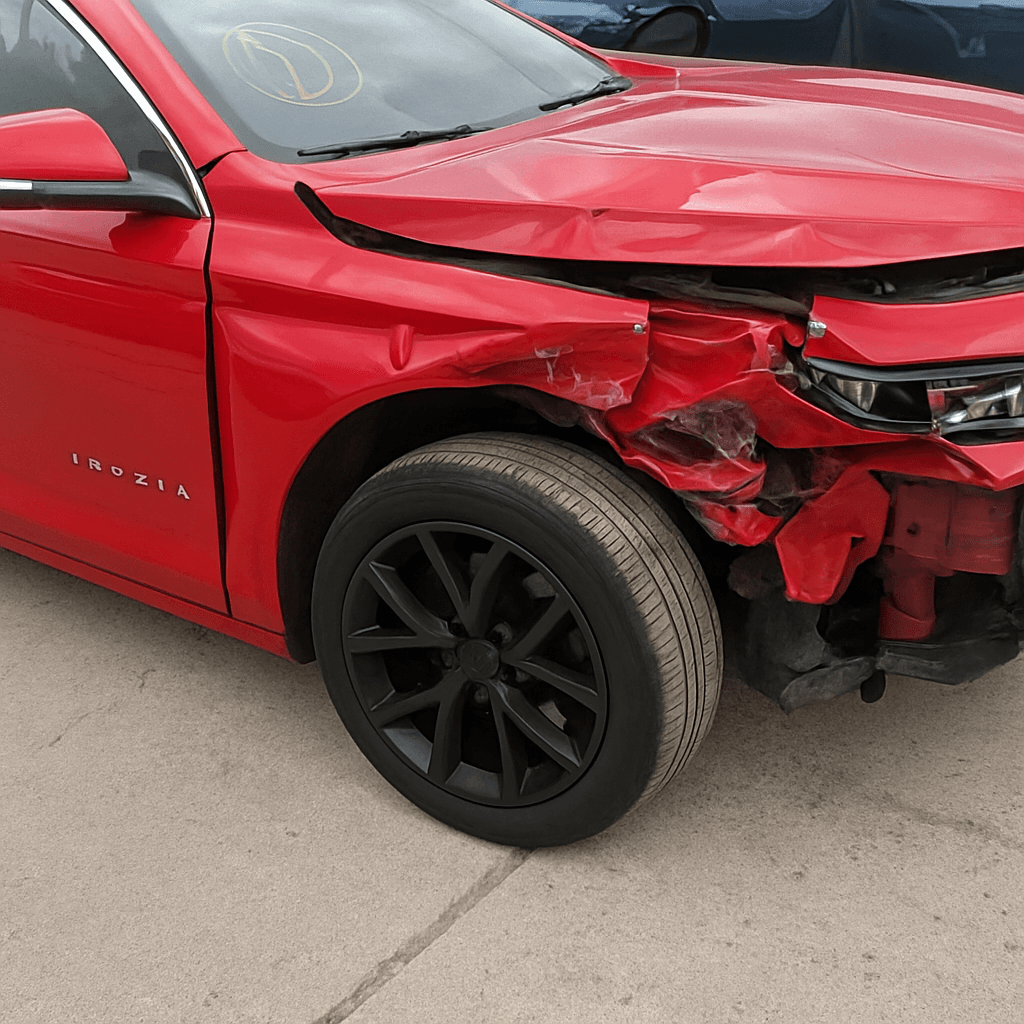
When a standard carrier adds a 60% surcharge to your prior $120/month premium, they're pricing you at $192/month because their actuarial model expects one accident to predict future claims at a rate their preferred book can't absorb profitably. Non-standard carriers start with a baseline that already assumes accident history across the pool. A driver with one at-fault accident in a non-standard book is priced closer to the pool average, not as an outlier. The result: non-standard baseline rates for accident-tier drivers often land 30–50% below standard-carrier surcharged rates.
The carriers writing California SR-22 post-accident business aggressively include The General, Bristol West, Acceptance Insurance, Infinity, Kemper, Dairyland, Progressive (which straddles standard and non-standard tiers), and Geico (selectively). Each uses different underwriting variables — some weight accident recency heavily, others focus on violation-free years since the event, others price by zip code density and theft rates. Shopping multiple non-standard carriers surfaces meaningful variation even within the non-standard tier.
Related Articles


The Three-Tier Comparison Strategy
Quote at least one carrier in each of three categories: your current standard carrier (to confirm the surcharge), one mid-tier hybrid like Progressive or Geico that writes both standard and non-standard business, and two pure non-standard specialists like The General or Bristol West. Request identical coverage limits across all quotes: California state minimums if budget is the absolute constraint, or $50,000/$100,000/$50,000 if you can afford modest protection above minimums.
Non-owner SR-22 policies apply if you sold your vehicle after the accident or don't currently own a car but still need to satisfy California's SR-22 filing requirement to reinstate your license. Non-owner policies cover you when driving borrowed or rented vehicles and cost significantly less than standard policies because they exclude the vehicle risk component. Geico, The General, Progressive, and Dairyland all write non-owner SR-22 in California. Expect $30–$60/month for state-minimum non-owner SR-22, compared to $80–$200/month for owner policies post-accident.
Some non-standard carriers offer monthly payment plans with no down payment or minimal fees. Others require 20–30% down. Payment structure affects cash flow more than total annual cost, but if your budget is tight, prioritize carriers offering $0-down monthly plans: The General and Acceptance both advertise this explicitly. Progressive and Geico require down payments but often quote lower monthly rates, so calculate total six-month cost to compare accurately.
California SR-22 Filing Period
3 years
California requires continuous SR-22 filing for 3 years from your license reinstatement date for most accident-related suspensions. Any lapse during this period triggers immediate re-suspension, and the 3-year clock resets from your new reinstatement date.
California Vehicle Code §16070
What Happens If You Let SR-22 Lapse
California's Electronic Financial Responsibility system cross-matches carrier filings against DMV license records in near real-time. When your carrier cancels your policy or you drop coverage, they electronically notify the DMV within 15 days. The DMV issues an immediate suspension notice. You cannot drive legally from the moment the DMV processes the lapse notification, even if you haven't received the mailed notice yet.
Reinstatement after an SR-22 lapse requires filing a new SR-22 certificate, paying a $125 reissue fee to the DMV, and restarting your 3-year SR-22 clock from the new reinstatement date. If your lapse exceeded 90 days, some carriers will re-underwrite you as a lapse risk on top of your existing accident surcharge, compounding your rate. Continuous coverage is not optional — it's the only way to avoid re-suspension and rate compounding.
Compare Accident-Tier Carriers Now
The cheapest SR-22 after a California accident is found by comparing non-standard carriers that specialize in your tier, not by accepting the first surcharged quote your current carrier offers. Request quotes from The General, Bristol West, Acceptance, Progressive, and Geico. Specify identical coverage limits and ask for monthly payment options with minimal or zero down payment. Provide your accident date, the specifics of the at-fault determination, and your current coverage history — accurate information produces accurate quotes and avoids re-underwriting surprises at binding.